
Danish street food reflects a strong tradition of simple, high-quality flavors rooted in regional ingredients and culinary history. In cities like Copenhagen, the street food culture offers a diverse selection, ranging from classic dishes like pølser (Danish hot dogs) to innovative interpretations of smørrebrød (open-faced sandwiches).
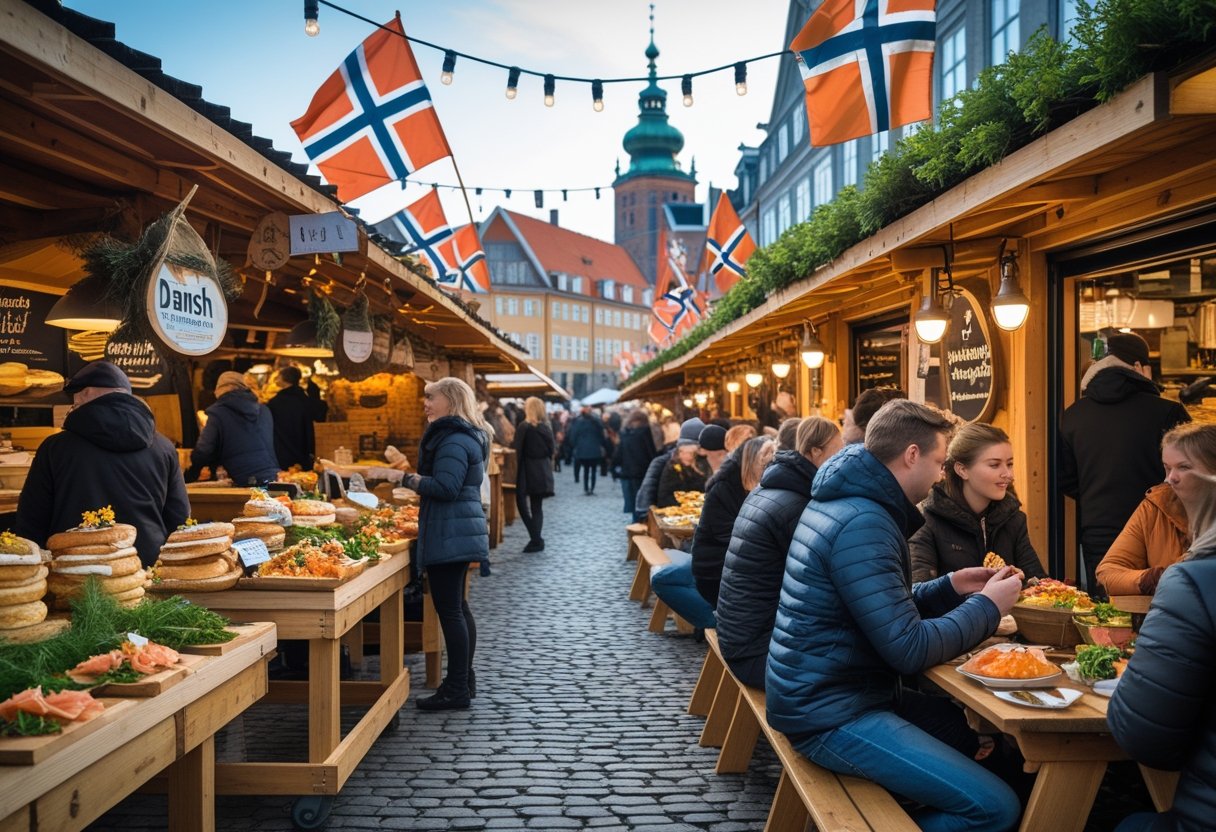
A defining feature of Danish street food is its balance between tradition and modernity, providing locals and visitors with accessible, flavorful meals that highlight Denmark’s rich food heritage. Popular street food markets and stalls across Copenhagen showcase this blend, creating vibrant spaces where everyone can enjoy authentic Danish cuisine in casual settings.
The street food culture in Denmark continues to evolve, combining sustainability and fresh, local produce to meet contemporary tastes without losing its core identity. Places like Copenhagen’s food markets contribute significantly to this growing scene, making Danish street food an essential part of the city’s culinary landscape. For more details, explore the best spots and traditional recipes in Denmark’s street food culture.
,
Signature Danish Street Foods
Danish street food features a variety of hearty and flavorful dishes rooted in traditional cuisine. Many items showcase rye bread, pickled elements, and simple yet rich toppings. The balance of savory and sweet options reflects Denmark’s culinary preferences.
Smørrebrød: The Danish Open-Faced Sandwich
Smørrebrød, the iconic Danish open-faced sandwich, is built on dense rye bread. It often includes a layer of butter or remoulade to enhance flavor and texture.
Popular toppings vary widely, but common choices include pickled herring, roast beef, and liver pâté. These are frequently garnished with crisp onions, fresh herbs, or pickled vegetables.
This dish is typically served cold and intended to be eaten with a knife and fork. It balances robust flavors and is a staple in Danish cuisine for both street food and formal meals.
Classic Danish Hot Dogs
The Danish hot dog stands out for its specific array of toppings and condiments. A traditional Danish hot dog features a sausage in a soft bun, often served with ketchup, mustard, and remoulade.
Additional toppings include crispy fried onions, raw onions, and pickled cucumbers. Some versions add a red cabbage or a slice of pickle for tanginess.
These hot dogs are widely available at street vendors and are a popular quick meal. Their combination of sweet, sour, and savory components distinguishes them from other Nordic hot dogs.
Frikadeller and Traditional Bites
Frikadeller are Danish meatballs made from minced pork or a mix of pork and beef. They are seasoned simply with onions, salt, and pepper, then pan-fried for a crispy outside and tender inside.
Often, frikadeller are served with boiled potatoes and creamy sauces like Danish brown sauce. They are a common comfort food and popular street snack across Denmark and surrounding countries.
Other traditional bites may include small open-faced sandwiches or crispy pork roast sandwiches, providing a deep connection to Denmark’s heritage of simple, well-prepared proteins.
Sweet Treats: Æbleskiver and Kanelsnegle
Æbleskiver are round Danish pancakes, cooked in a special pan to create a light and fluffy texture. Traditionally filled with apple slices or jam, they are dusted with powdered sugar.
Kanelsnegle, or cinnamon rolls, are made from yeasted dough rolled with butter, cinnamon, and sugar. Their sticky-sweet flavor and soft layers make them a beloved pastry snack.
Both items are commonly found at Danish markets and street vendors. They offer a contrasting sweetness that complements the more savory offerings of Danish street food.
For more on Danish street food traditions and authentic recipes, visit Danish Street Food: Best Recipes & Restaurants.
,
Copenhagen’s Iconic Street Food Markets
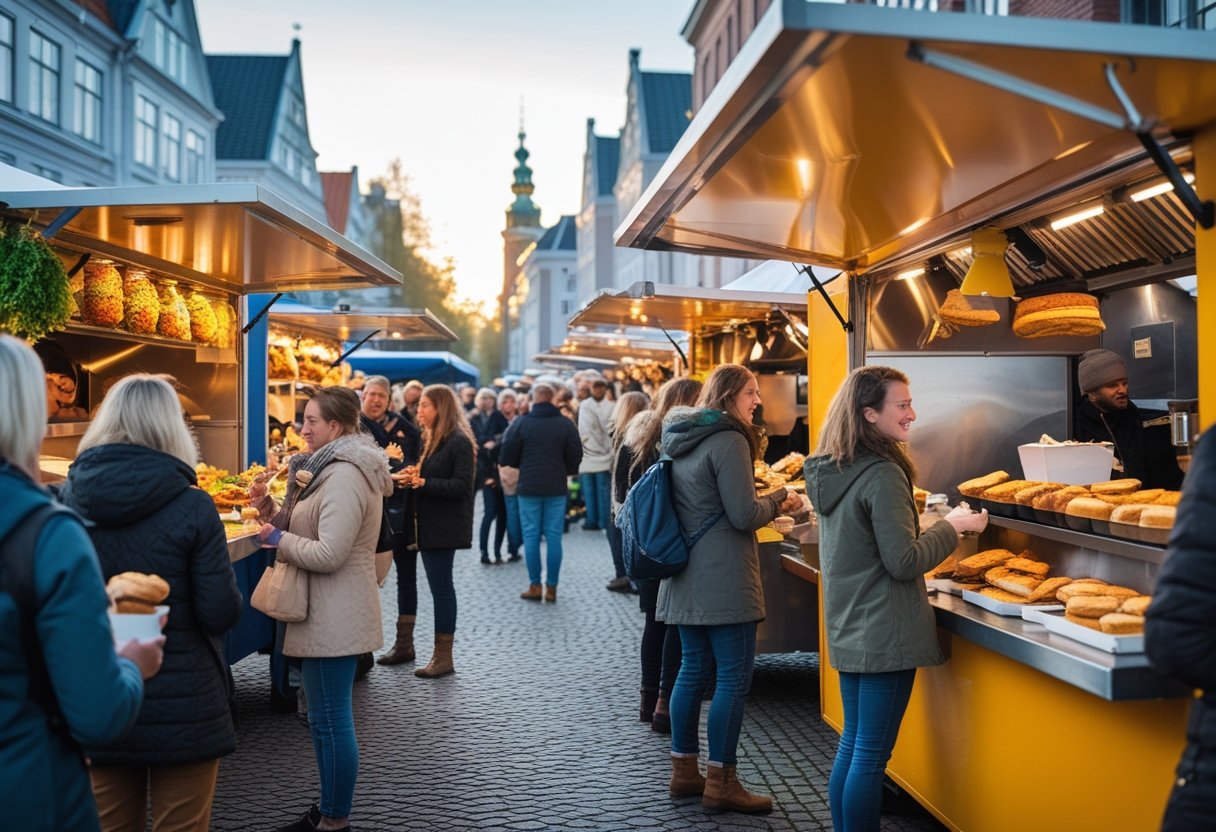
Copenhagen’s street food scene offers a blend of innovative cuisine, traditional flavors, and vibrant atmospheres across multiple key locations. Each market presents its own unique character, whether an open-air creative hub or a gourmet food hall. Together, these places showcase the city’s commitment to quality, sustainability, and diverse culinary experiences.
Reffen: The Creative Food Hub on Refshaleøen
Reffen is Copenhagen’s largest street food market, situated on Refshaleøen, an industrial island transformed into a dynamic gastronomic space. It features more than 50 food stalls and trucks offering diverse global cuisines, from Danish seasonal ingredients to international fusion dishes.
The market prioritizes sustainability, with many vendors using organic, locally sourced produce. Reffen also hosts live events, workshops, and cultural activities, making it a social venue beyond just food. Its open-air layout creates a casual setting where visitors can enjoy views of the harbor while sampling innovative street food.
Torvehallerne: Gourmet and Traditional Choices
Located near Nørreport Station, Torvehallerne is a modern food market combining traditional Danish style with gourmet options. Unlike outdoor stalls, it is housed in two glass pavilions that operate year-round, offering a mix of fresh groceries, specialty foods, and ready-to-eat items.
Visitors find artisanal bread, high-quality seafood, cheeses, and open-faced sandwiches known as smørrebrød. Many stalls serve gourmet coffee, craft beers, and natural wines. Torvehallerne balances fast food, casual dining, and luxury groceries, attracting both locals and tourists seeking an accessible yet refined food experience in central Copenhagen.
Bridge Street Kitchen: Broens Gadekøkken Experience
Bridge Street Kitchen, also known as Broens Gadekøkken, is positioned on the bridge connecting Nyhavn and Christianshavn. It offers a concise but well-curated street food market with a focus on local flavors and international favorites.
With around a dozen food vendors, the market emphasizes quality and quick bites such as gourmet burgers, fresh seafood, and fusion tacos. The location along the water makes it a popular spot for lunch or casual dinners, especially in warm weather. The combination of its scenic setting and varied food options creates an approachable urban street food experience.
Trendy Neighborhood Spots: Nørrebro, Vesterbro, and Christianshavn
Beyond major markets, several neighborhoods in Copenhagen host smaller yet vibrant street food scenes. Nørrebro is known for its multicultural food offerings, with street vendors serving Middle Eastern, Asian, and Nordic dishes in lively urban spaces.
Vesterbro blends hip cafes with food trucks, often featuring seasonal menus and craft beverages. Christianshavn, near the harbor, offers artisanal treats and seafood-focused vendors, reflecting its maritime heritage. These neighborhoods provide diverse, local authenticity and often act as incubators for new street food concepts away from the busiest tourist areas.
For those interested in exploring Copenhagen’s street food beyond the main markets, these areas are essential stops.
Explore more about these locations and their culinary diversity at street food markets in and around Copenhagen.
,
Popular Street Food Vendors and International Flavors
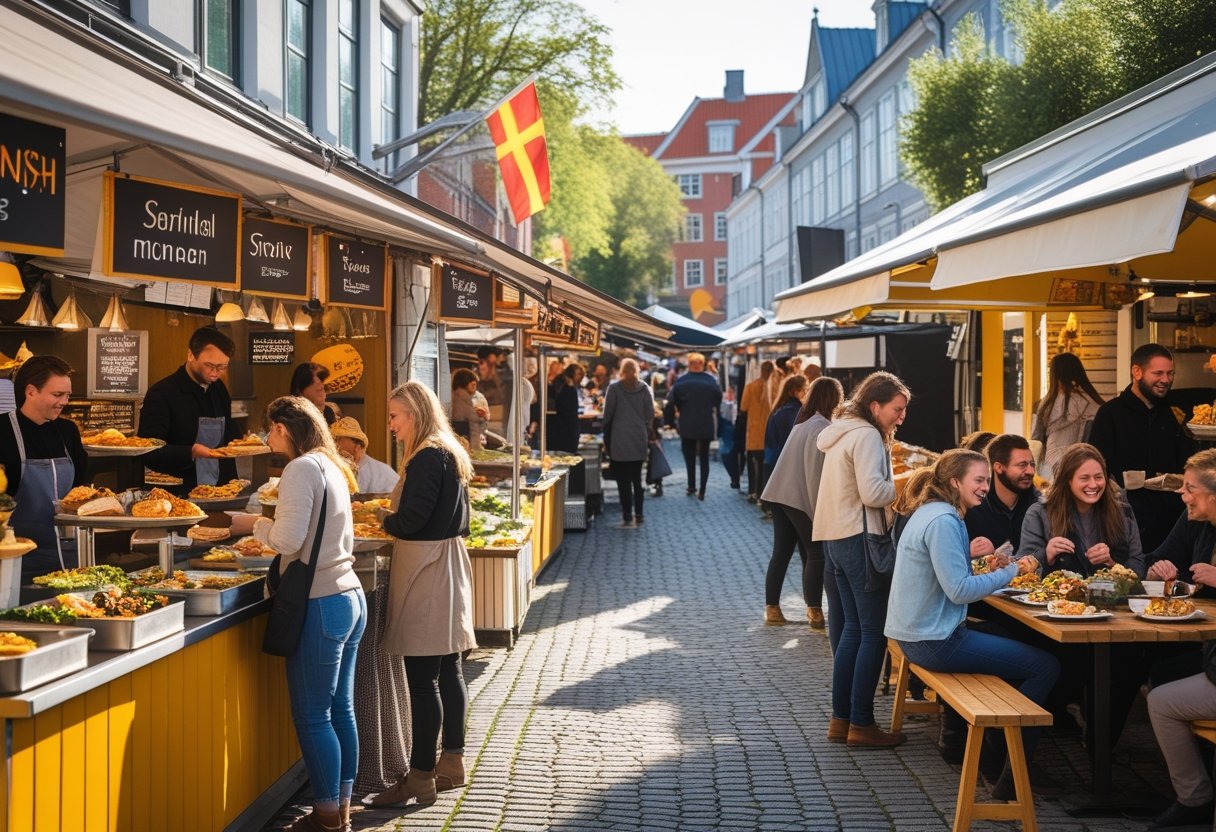
Copenhagen’s street food scene blends traditional Danish fare with innovative international influences. Vendors push boundaries in flavors and presentation, while food markets offer diverse cuisines, vibrant social settings, and quality beverages.
Gasoline Grill and Burger Innovation
Gasoline Grill stands out for its high-quality burgers made from organic, responsibly sourced ingredients. It began inside a former gas station and quickly gained acclaim for delivering perfectly cooked patties and crisp buns. The menu remains focused, with classic options done exceptionally well.
Burger innovation also extends to poulette and ma poule, which specialize in grilled chicken sandwiches with fresh toppings and unique sauces. These vendors emphasize simplicity paired with refined technique, reflecting Copenhagen’s emphasis on elevating classic street food staples.
Global Influences: Tacos, Bao Buns, Dumplings, and Sushi
Copenhagen embraces global street foods, showcased by vendors like Hija de Sanchez, known for authentic Mexican tacos. The city also hosts vendors specializing in bao buns, offering soft, steamed buns filled with pork or vegetarian options.
Gao Dumpling Bar highlights Asian flavors through handmade dumplings, while several stalls serve fresh sushi in casual, accessible formats. This variety complements traditional Danish offerings and reflects the city’s openness to culinary fusion.
Craft Beer, Cocktails, and Social Vibes
Many food markets pair street food with craft beer and cocktails, creating lively social hubs. Reffen, the largest street food market in the Nordics, features craft beer stalls that highlight local breweries alongside innovative cocktail bars.
These markets encourage relaxed mingling and tastings, blending food and drink into a communal experience. The focus is on quality beverages that complement the diverse street food options, enhancing the overall food culture atmosphere.
,
Frequently Asked Questions
Danish street food features a variety of hearty and flavorful dishes rooted in local tradition. Menus often blend classic ingredients with modern twists, highlighting regional specialties and inventive flavors. Popular markets and vendors provide a wide range of options that showcase the country’s culinary diversity.
What are typical dishes served at Danish street food markets?
Typical dishes include hot dogs with unique Danish toppings like remoulade and crispy fried onions. Open-faced sandwiches known as smørrebrød, Danish pastries, and frikadeller—meatballs often served with creamy sauces—are also common.
What can you expect to find on a typical Danish street food menu?
You can expect a mixture of traditional Nordic ingredients and international influences. Common items include hearty meat dishes, fresh seafood, rye bread-based snacks, and innovative vegetarian options. The menus often emphasize local sustainability and seasonal produce.
Which street food markets in Copenhagen are considered must-visit?
Reffen, located in a former shipyard, is regarded as the largest and most dynamic street food market in the Nordics. It offers a diverse atmosphere with numerous stalls focused on local ingredients. Broens Street Food is known for its riverside location and diverse global cuisine offerings.
What are the top street food items unique to Denmark?
The Danish hot dog stands out due to its specific combination of sauces and toppings. Frikadeller, the Scandinavian-style meatballs, and traditional open-faced sandwiches made with rye bread are also distinct Danish staples in street food culture.
How does Rye bread feature in Danish street food culture?
Rye bread is a fundamental ingredient, especially in smørrebrød, the open-faced sandwiches commonly served. It provides a dense, flavorful base that complements a variety of toppings from pickled herring to roast beef.
What culinary experiences do Broens Street Food offer?
Broens Street Food presents a mix of Danish and international dishes in a lively waterfront setting. It focuses on fresh, high-quality ingredients with options ranging from casual snacks to fuller meals, appealing to a broad range of tastes and preferences.
For deeper details on Danish street food markets and dishes, see this guide to Street Food in Copenhagen and information on the Reffen Copenhagen Street Food Market.